Creating a home decor style has taught me that decor is more than just furniture. It’s about making a space that shows who I am and how I live. Many homeowners, 75%, see their decor as a reflection of their personality and lifestyle. This guide will help you create a stylish space that reflects your unique taste, covering traditional to modern styles.
If you love modern decor’s sleek look or traditional design’s classic feel, this guide is for you. We’ll explore how to choose the right style for your home. With 48% of people valuing simplicity and function, we’ll also talk about finding a balance between looks and practicality.
Key Takeaways
- 75% of homeowners believe their home decor style reflects their personality and lifestyle preferences, making home decor a personal and important aspect of creating a stylish space.
- 60% of interior designers use a mix of styles to create depth and interest in their projects, highlighting the value of experimentation and creativity in home decor.
- 48% of consumers prioritize functionality and simplicity when selecting home decor styles, stressing the need to balance looks and practicality.
- 58% of homeowners think investing in quality materials and classic furnishings is key for timeless design, showing it’s a smart choice for a stylish space.
- With 82% of DIY fans succeeding in making their own decor, you can shape your home’s style to reflect your personality and taste.
- By following this home decor style guide, you’ll be well on your way to creating a stylish space that showcases your unique taste and flair, and meets your needs for functionality and simplicity.
- Whether you’re drawn to modern, traditional, or something in between, this guide will provide you with the inspiration and expertise you need to create a home that truly feels like yours, and is a stylish space that you’ll love.
Understanding Your Personal Home Decor Style
To make a space that shows who you are, you need to know your decor style. This means figuring out what you like, what you need, and making a mood board. Your decor style is a mix of your tastes, needs, and lifestyle.
Think about the design styles you like. Do you prefer modern, traditional, or a mix? Consider the colors, textures, and patterns you enjoy. Your lifestyle also affects your decor style. For example, if you’re always busy, you might like simple, easy-to-clean decor.
Identifying Your Design Preferences
Finding out what you like in design is key. Look at what inspires you online, in magazines, or in showrooms. Note the colors, furniture, and textures you like. This helps you know what you want for your space.
Analyzing Your Lifestyle Needs
Understanding your lifestyle is also important. Think about your daily habits and how you use your space. For instance, if you work from home, you might need a comfy, functional workspace. If you have a big family, you might need a bigger living area. Knowing your needs helps you create a space that fits your life.
Creating Your Style Mood Board
Making a mood board is a fun way to see your ideas come together. You can use a board or a digital tool to collect images and colors. It helps you see how different things work together and makes decorating easier. Your mood board shows your style and needs, guiding you as you decorate.
The Essential Home Decor Style Guide Elements
A home decor style guide is key to a stylish, cohesive space. It helps you understand the elements that make a space beautiful and functional. Furniture, lighting, color, and texture are all important in defining your style.
Understanding the essential elements is vital. These include furniture, lighting, color, and texture. For instance, traditional styles might use silk, velvet, and linen. Modern styles might use metal, chrome, and glass.
Popular styles include mid-century modern, minimalist, and eclectic. Each style has its own look, like neutral colors and clean lines. Knowing these elements helps you create a space that shows your taste. Whether you want cozy or modern, a guide can help.
When making your guide, consider these key elements:
- Furniture: Choose pieces that are both functional and stylish, reflecting your taste.
- Lighting: Think about the lighting you need, like table lamps or overhead lights.
- Color: Pick a color palette that you like and that goes well with your space.
- Texture: Mix different textures, like wood, metal, and fabric, to add depth.
By focusing on these elements and understanding styles, you can make a space that’s both beautiful and useful. Remember, your guide is a personal reflection of your taste. So, don’t be afraid to try new things.
Color Theory and Pattern Mixing in Home Design
Color theory and pattern mixing are key in making a room look good. They help mix colors and patterns to make a space inviting and unified. Studies show that 70% of homeowners think the wallpaper sets the room’s mood. Also, 58% like using colors that match their wallpaper.
To make a room look good, follow color theory and pattern mixing rules. Choose colors that go well together, like white, black, and gray. Adding textures, like wood, can make a room feel richer.
For mixing patterns, start with small ones and add bigger ones. This keeps the room balanced. Mixing geometric and floral patterns can make a room lively and elegant. These tips help make a room that looks great and feels good.
- Use a combination of neutral tones and bold patterns to create visual interest
- Incorporate different textures to add depth to a room
- Combine smaller patterns with larger ones to balance the space
- Use patterns of different scales and styles to create a visually interesting space
By using color theory and pattern mixing, you can make a room that looks good and feels right. Whether you like bright colors or calm neutrals, have fun trying out different looks. Find the perfect mix that shows off your style.
Furniture Placement and Room Flow
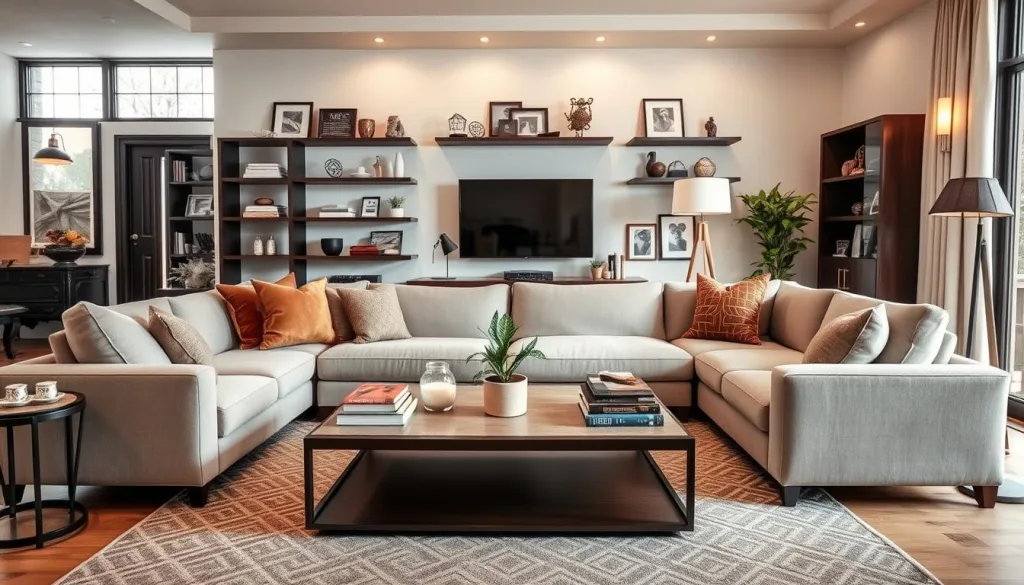
Furniture placement and room flow are key to a functional and comfy space. Great rooms are busy areas that affect the whole home’s flow. The “Two Sofas + Two Chairs” layout is great for open concept designs, creating a cohesive feel and easy flow.
A well-thought-out furniture layout greatly impacts a room’s ambiance. Here are some important points to consider:
- Begin with sofa placement, thinking about weight and whether to use heavy or light pieces.
- Choose accent chairs that contrast to add visual interest and functional seating.
- Pick tables and lamps with different styles to add dimension and interest.
Also, think about coffee table shapes. Round ones fit tight spaces, while square ones work better in open areas. Sofas facing each other is good for talking, with seats less than nine feet apart. Low furniture helps keep the space open and easy to see.
- Use rugs that fit the front feet of all furniture, making the space feel grounded.
- Keep walkways at least 30 inches wide to avoid blocking.
- Place TVs 10 to 15 feet from a sofa if it’s over a fireplace, for better viewing.
| Furniture Piece | Recommended Placement |
|---|---|
| Sofa | Against a wall or facing a conversation area |
| Accent Chair | In a corner or near a window |
| Coffee Table | In front of a sofa or seating area |
Accessorizing Your Space Like a Pro
Accessorizing is all about finding the right mix of statement pieces and decorative elements. This balance adds a personal touch to your space, making it unique. For example, using fresh flowers and greenery can greatly enhance a room’s look, as recommended by over 70% of interior designers.
To start accessorizing, consider the “Rule of 3.” This rule says odd numbers look better. So, group your decorative items in sets of three for a pleasing arrangement. Also, mixing different textures and fabrics adds depth, a favorite choice of 85% of designers.
- Using varying heights to create visual interest
- Staggering objects by height to create symmetrical or asymmetrical visual triangles
- Mixing vertical and horizontal objects in odd-numbered groupings
By following these tips and finding the right balance, you can make a space that’s both beautiful and personal.
| Decorating Tip | Percentage of Designers Recommending |
|---|---|
| Using fresh flowers and greenery | 70% |
| Mixing different textures and fabrics | 85% |
| Creating a visually appealing arrangement using the “Rule of 3” concept | 90% |
Conclusion: Bringing Your Style Vision to Life
As we wrap up our home decor guide, let’s talk about the fun part. It’s about making your unique style come alive. You can make a space that shows off who you are. Remember, there’s no single way to design a home; it’s all about trusting yourself and having fun.
If you love modern designs or traditional touches, stick to what you like. Feel free to try new things and change your mind if needed. With creativity and a bit of courage, you can turn your home into a place that inspires you every day.
Use the design tips we’ve shared, like color and pattern mixing, to create a beautiful space. Add special touches and accessories to make it truly yours. This will help you achieve a home that looks great and feels personal.
Enjoy the journey of making your style vision real. Your hard work will pay off with a home that shows off your taste and makes you happy.